Hey there! I’m a supplier of Wedge Wire Filter Screens, and I often get asked about how to boost the anti-clogging ability of these screens. It’s a crucial aspect, especially when you’re dealing with various filtering applications. In this blog, I’ll share some practical tips and insights based on my experience in the industry. Wedge Wire Filter Screen
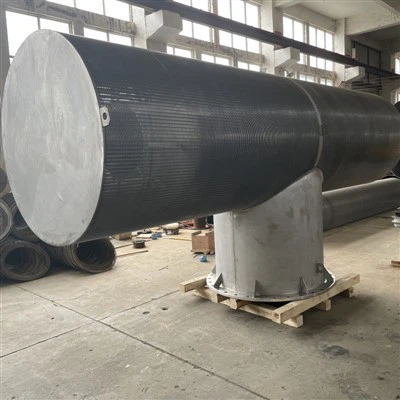
Understanding the Basics of Clogging
First things first, let’s understand why clogging happens. Clogging occurs when particles in the fluid being filtered build up on the surface or within the pores of the wedge wire filter screen. This can be due to a variety of factors, like the size and shape of the particles, the viscosity of the fluid, and the flow rate.
For instance, if you’re filtering a thick sludge with large, irregularly shaped particles, the chances of clogging are much higher compared to filtering a clear liquid with fine particles. Also, a high flow rate can sometimes cause particles to accumulate faster, while a low flow rate might not provide enough force to keep the screen clean.
Choosing the Right Wedge Wire Filter Screen Design
The design of the wedge wire filter screen plays a huge role in its anti-clogging ability. There are different types of designs available, and choosing the right one can make a significant difference.
Slot Size
The slot size of the screen is a crucial factor. You need to select a slot size that is small enough to capture the particles you want to filter but large enough to prevent them from getting stuck. If the slots are too small, the particles will quickly block the screen, but if they’re too large, the filtration efficiency will be poor.
For example, if you’re filtering sand particles, you’ll need a screen with a slot size that is slightly smaller than the average size of the sand grains. This way, the sand will be trapped on the surface of the screen, and if the design is right, it can be easily removed.
Profile Shape
The profile shape of the wedge wire also affects the anti-clogging performance. A rounded or smooth profile is better than a sharp or jagged one. A smooth profile allows the particles to slide off the screen more easily, reducing the chances of them getting caught in the slots.
Also, some wedge wire designs have a self-cleaning feature built into the profile. For example, a V-shaped profile can make it easier for the particles to move towards the edge of the screen, where they can be flushed away.
Pre – treatment of the Fluid
Pre – treating the fluid before it reaches the wedge wire filter screen can significantly improve its anti – clogging ability. There are several pre – treatment methods you can use.
Settling Tanks
Using settling tanks is a simple and effective pre – treatment method. In a settling tank, the fluid is allowed to stand still for a period of time. The heavier particles will settle to the bottom of the tank, reducing the number of particles that reach the filter screen.
This is especially useful when dealing with fluids that contain a large amount of sediment. By removing the larger particles in the settling tank, the filter screen is less likely to get clogged, and its lifespan will be extended.
Coagulation and Flocculation
Coagulation and flocculation are chemical pre – treatment methods. Coagulation involves adding chemicals to the fluid to neutralize the charges on the particles, causing them to stick together. Flocculation then involves gently mixing the fluid to form larger flocs, which can be more easily removed.
These methods can be very effective in reducing the number of fine particles in the fluid. By reducing the fine particle load, the filter screen is less likely to become clogged, and the filtration process will be more efficient.
Regular Maintenance
Regular maintenance is essential for keeping the wedge wire filter screen in good condition and improving its anti – clogging ability.
Backwashing
Backwashing is one of the most common maintenance techniques. It involves reversing the flow of fluid through the filter screen. This helps to dislodge the particles that have accumulated on the screen and flush them out.
The frequency of backwashing depends on several factors, such as the type of fluid being filtered, the flow rate, and the particle concentration. In some cases, backwashing can be done automatically at regular intervals, while in other cases, it might need to be done manually.
Chemical Cleaning
In some situations, backwashing alone might not be enough to remove all the particles from the screen. In these cases, chemical cleaning can be used. Chemical cleaning involves using special cleaning agents to dissolve or loosen the particles that are stuck on the screen.
However, it’s important to choose the right cleaning agent and follow the manufacturer’s instructions carefully. Using the wrong cleaning agent can damage the screen and reduce its performance.
Monitoring and Adjusting the Filtration Process
Monitoring the filtration process is crucial for identifying potential clogging issues early and taking appropriate action.
Pressure Drop Monitoring
One of the easiest ways to monitor the filtration process is by measuring the pressure drop across the filter screen. As the screen begins to clog, the pressure drop will increase because it becomes more difficult for the fluid to pass through the screen.
By regularly monitoring the pressure drop, you can detect when the screen is starting to clog and take action, such as increasing the backwashing frequency or adjusting the flow rate.
Flow Rate Adjustment
Adjusting the flow rate can also help to improve the anti – clogging ability of the filter screen. If the flow rate is too high, the particles might be forced into the slots of the screen, increasing the chances of clogging. On the other hand, if the flow rate is too low, the particles might not be able to move through the screen quickly enough.
Depending on the type of fluid and the screen design, you might need to adjust the flow rate to find the optimal level that minimizes clogging.
Conclusion
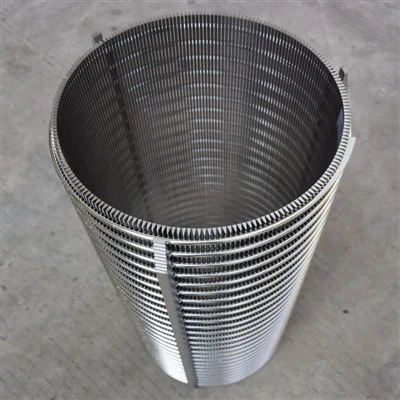
Improving the anti – clogging ability of a wedge wire filter screen is a multi – faceted process. It involves choosing the right screen design, pre – treating the fluid, regular maintenance, and monitoring and adjusting the filtration process. By following these tips, you can significantly reduce the chances of clogging, extend the lifespan of your filter screen, and improve the overall efficiency of your filtration system.
Sintered Metal Material and Filter Element If you’re interested in learning more about wedge wire filter screens or are in the market to purchase them for your filtration needs, don’t hesitate to contact us. We’re here to help you find the best solution for your application and ensure that you get the most out of your filter screens.
References
- "Wedge Wire Filter Technology Handbook"
- "Filtration and Separation: A Practical Guide"
- Industry research papers on wedge wire filter performance and anti – clogging solutions.
Henan Easy Filter Equipment Co., Ltd.
As one of the leading wedge wire filter screen manufacturers and suppliers in China, we offer a wide range of products with superior quality. Please rest assured to buy advanced wedge wire filter screen from our factory. We also accept customized orders.
Address: Apartment No.1, Building No.2, Zhengshang Jinyushijia, Xinzhong Street, Xinxiang, Henan, China.
E-mail: vivian@easyfiltertech.com
WebSite: https://www.easyfilter-china.com/
